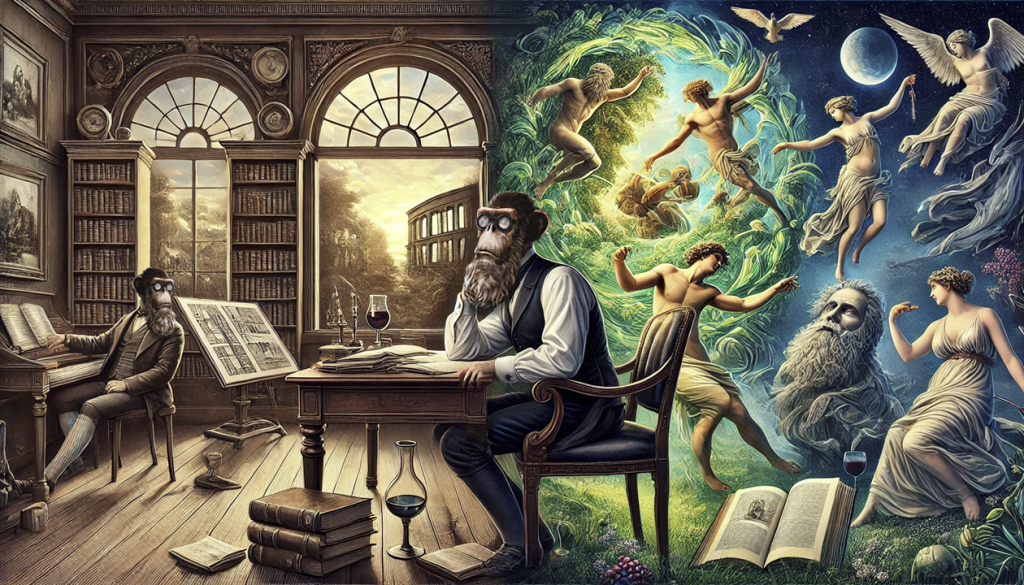
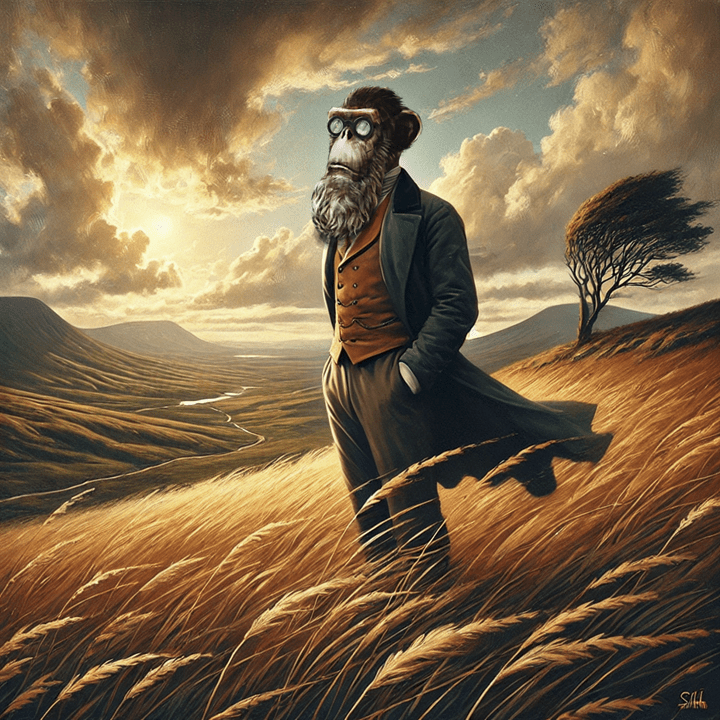
Perception is valuation; to resignify the world is to remake it

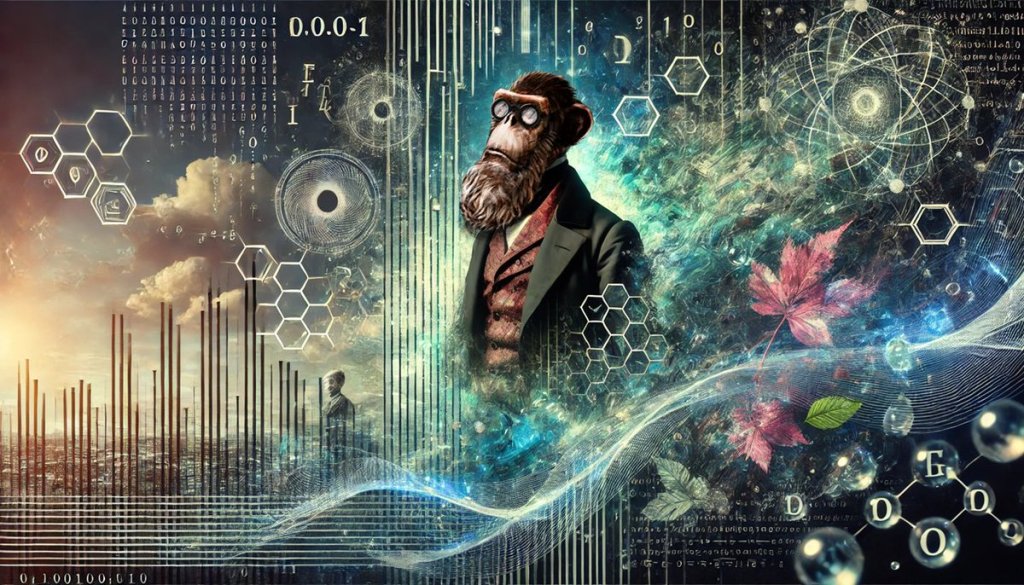
Our seemingly accurate experience of the world is, in part, a constructed configuration of value.

When one liberates the mind from “concepts”, it becomes possible to re-value the world, thereby transcending the constraints of preconceived notions that shape one’s perception of reality.

Language, and other symbols, play a key role in this process, as the symbols we use to describe our world are not merely labels but frameworks that structure our understanding of it.

This raises a critical question: why do we value and articulate observations in the particular ways that we do?

At this intersection of linguistic convention and cognitive structuring, tradition and transformation converge, highlighting the dynamic interplay between inherited frameworks of meaning and the potential for conceptual innovation.

Thus spoke Thorpe Brown

The mirror of becoming: A tale of reflection and transformation

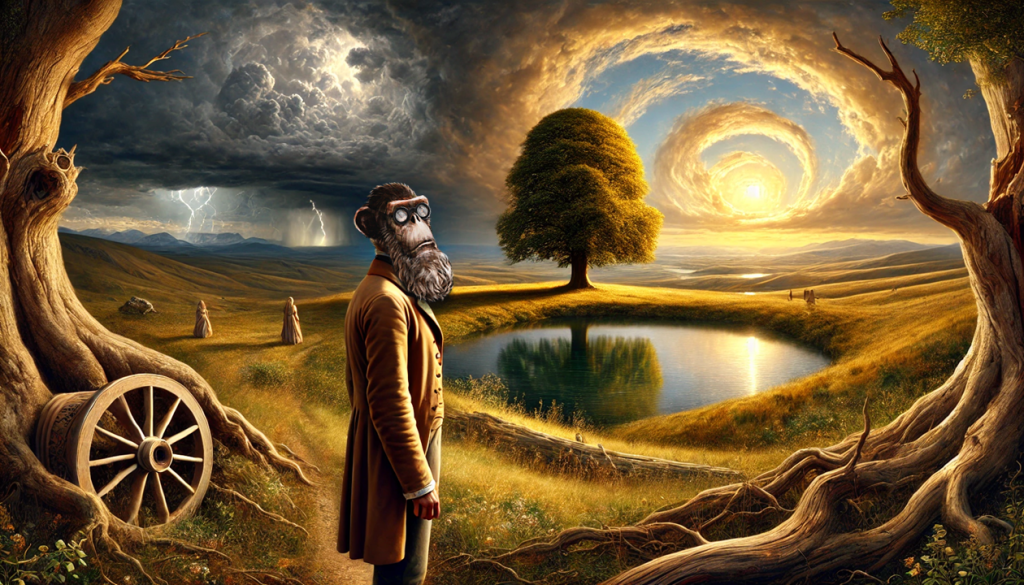
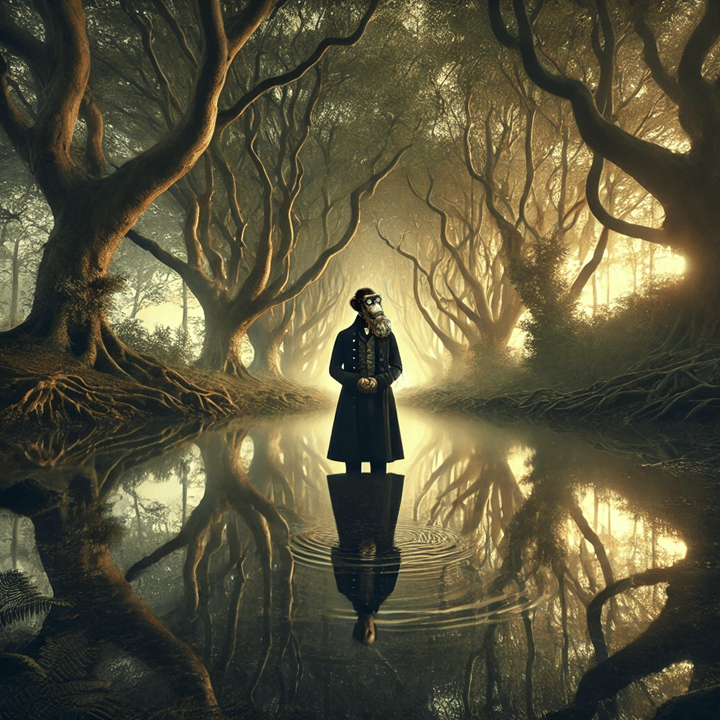
In an ancient forest untouched by time, where ancient oaks whispered truths only the wind could carry, a traveller paused by a still, glassy pool. Its surface mirrored the world above—a flawless inversion of sky and canopy—but something peculiar lingered beneath. This was no mere reflection; it seemed another realm entirely, glimmering faintly, as though inviting the traveller to see beyond. Burdened with masks constructed from society’s demands, he gazed into the depths, questioning the image before him. Who was this figure staring back—a being of substance, or merely a shadow cast by illusions too vast and tangled to name?

As he leaned closer, the water quivered, dissolving the boundary between reflection and reality. The traveller was drawn into the depths, where light danced in shifting hues, and voices not his own murmured his thoughts aloud. “Who are you?” the currents asked. But the question was not external—it resounded from within, a challenge to the core of his being. His masks began to crack, the fragments sinking into the void. Stripped bare, he faced the untempered chaos of his true self. For the first time, he saw his life as a labyrinth of borrowed identities, each step leading him further from the untamed wilderness of his own becoming.

When he emerged from the pool, the forest remained the same, yet it felt irrevocably altered. The trees no longer whispered to the wind but to him, their voices urging him to tread paths unmarked, to craft meaning from the ruins of his old identity. The water’s surface stilled, yet the journey within him had only just begun—an eternal dance of creation and destruction, a hymn to life’s infinite contradictions. As he walked on, he whispered to the world, “I am not what I was, nor what I will be. I am becoming.”

Programmed freedom?

The will to attention, once a lighthouse of self-determined focus, is now fragmented in the grip of digital precision, where every movement is tracked, every choice anticipated. In this age of programmed experience, freedom becomes an illusion, not because chains bind us, but because the labyrinth is designed to feel infinite while guiding us to preordained ends.

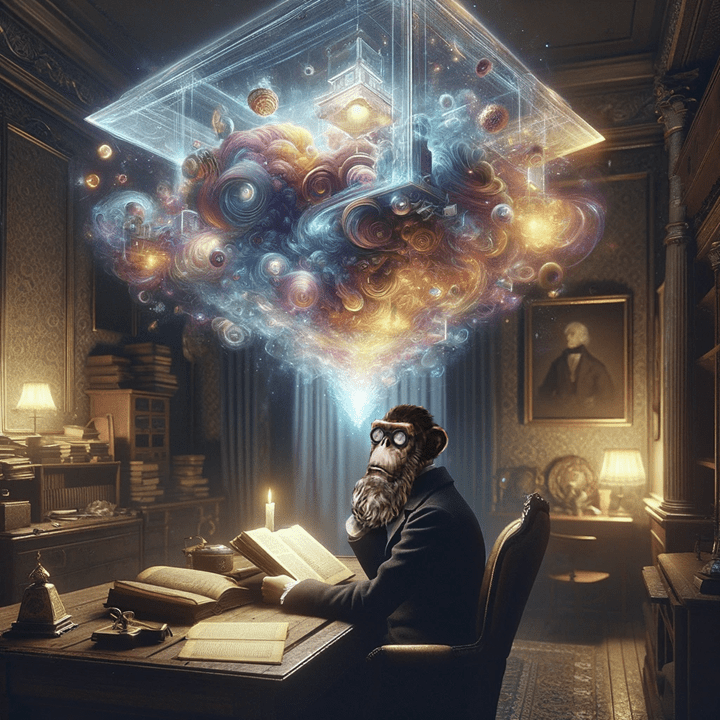
Multisensory active imagination

This is a tool inspired by the method of active imagination proposed by C. G. Jung. This entails diving into the depths of the unconscious mind by employing creative and symbolic forms of visualization.

Step 1. Begin with a multisensory image (perhaps based on one of the poems in this book).

Start your active imagination journey by selecting a mental image, one that can originate from any of your senses or even combine them. This image will serve as the central focus for your session.

Step 2. Contemplate and observe.

Find a quiet, comfortable spot free from distractions. Close your eyes and bring the chosen multisensory image to your mind’s eye. Contemplate it deeply, and observe it closely, engaging all your senses. Pay attention to every detail, whether it’s the vivid colours, the texture under your fingertips, or the subtle scent in the air.

Step 3. Allow spontaneous changes.

Resist the impulse to consciously shape the image or impose your thoughts upon it. Instead, merely watch and let it transform and evolve on its own. Notice how this multisensory image naturally shifts, possibly through spontaneous associations between your senses.

Step 4. Avoid impatience and distraction.

Maintain your patience and focus throughout the process. Refrain from rapidly jumping from one thought or image to another. Remember that this journey requires time and dedication. Keep your attention fixed on the initial multisensory image, even if it appears unchanging initially.

Step 5. Document changes.

As the multisensory image undergoes alterations, take mental notes or employ a journal to record each sensory transformation. Document the details and nuances of these sensory shifts.

Step 6: Step into the multisensory experience.

Once the image has sufficiently transformed, envision yourself stepping into it, as if immersing yourself in a different sensory world. If the multisensory image includes a speaking figure, engage in a conversation. Express your thoughts and sensations and listen attentively to their responses through any of your senses.

Step 7. Analyse and reflect.

Following your active imagination session, allocate time to analyse your multisensory experiences. Reflect upon the sensory changes, conversations, and emotions you experienced. Consider the symbolism and meaning of the elements that came up.

Step 8. Unite the the experience with present awareness. This process gradually cultivates unity between your conscious and unconscious mind, a key step in your journey toward self-individuation. Note that active imagination is an intensely personal and introspective practice. Exercise patience and permit your inner world to unfold organically. Over time, this technique can lead to profound insights and self-discovery through the richness of your multisensory experiences.
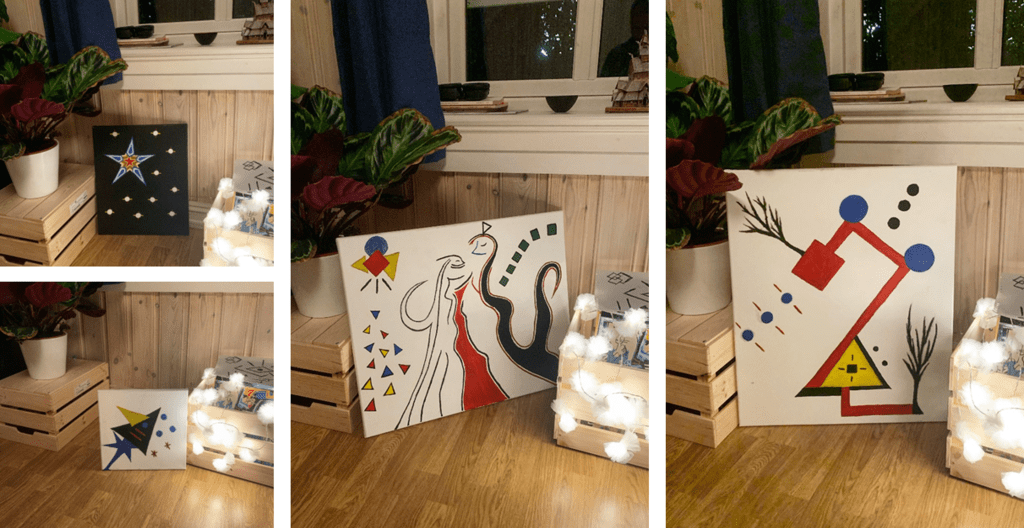
The sun of nothing collection – Oil painting

As stated in Stedelijk museum, “the abstraction of reality moves the focus from what is depicted as main factor to how it is depicted”. The works presented here are part of a series of oil paintings entitled “The sun of nothing”.

System (top left), abstract thought (bottom left), geometric rain (centre), and the Kandinsky experience machine (right).

The sun of nothing is inspired by the Suprematism art movement, in particular the work of Kazimir Malevich. It is also inspired by the ideas of Wassily Kandinsky, and his form/colour relationships (circles = blue, squares = red, triangles = yellow).

Thorpe Brown recommends that you explore these pieces while listening to the album “Islands” by King Crimson or the album “Colors” by Between the Buried and Me, for enhanced, though qualitatively different, abstract experiences.

Liberation through naked awareness

Perceiving with naked awareness means shedding the layers of meaning and interpretation we habitually place upon reality. In this pure state of observation, we encounter the world as it truly is, free from bias and expectation. This act is not an escape from reality but a profound engagement with it, revealing that the distinctions we make between self and other are constructs of the mind. By witnessing the unadorned truth, we dissolve the illusion of a separate self that stands apart from what is observed.

By recognising ourselves as both the observer and an inseparable part of the observed, we unite the wisdom of the ancients with the insights of the moderns, moving beyond dualistic thinking. Liberation arises from fully welcoming reality without clinging or resistance, understanding that in true awareness, the self is both present and transcendent.

Thus spoke Thorpe Brown

Awakening the spirit

Awakening mirrors the journey of spiritual transformation described by Nietzsche in Thus Spoke Zarathustra, progressing through the three metamorphoses: from the camel’s burdened obedience, through the lion’s rebellious strength, to the child’s creative freedom.

The camel represents a stage where one carries the weight of societal expectations and accepted truths, submitting to external demands. Transitioning to the lion, the spirit gains the courage to rebel against these imposed values, asserting its own will and independence. Finally, the child symbolises a return to innocence and creativity, embodying the ability to create new values and embrace life with wonder and openness.

Meaning is not discovered but crafted—each choice a brushstroke on the canvas of existence. We are not passive recipients of predefined meanings but active artists of our own lives, shaping our reality through intentional actions and decisions.

Thus spoke Thorpe Brown

The dance of order and chaos

Apollo, god of light and reason bright,
Revered by poets, philosophers’ delight.
Dionysus, lord of wine and ecstasy,
Welcomed by revellers in festivity.

Nietzsche urged us to embrace
Dionysian spirit’s unrestrained grace—
To affirm life in its rawest form,
Beyond the shelter of the norm.

Yet in their union lies the key,
A balanced whole, a harmony.
By merging chaos with design,
We build a life that feels aligned.

In blending both, we find our voice,
A life enriched—a conscious choice.
By heeding both the heart and mind,
Our truest selves we come to find.

Thus spoke Thorpe Brown

Breaking the chains: The journey of the free spirit

Nietzsche’s concept of the “free spirit” challenges traditional beliefs and values by advocating for individuals to break free from societal norms to follow their unique paths in life.

Free spirits have achieved self-mastery and autonomy, allowing them to live with purpose and intention. Unbound by others’ judgements, they pursue their desires without fear or hesitation.

In our modern world, where many feel trapped by societal pressures favouring conformity over individuality, the free spirit offers a compelling and authentic alternative.

However, adopting this concept comes with challenges. It requires deep introspection, self-awareness, and the courage to take risks and face opposition, as free spirits often threaten the status quo.

Ultimately, the free spirit is a reminder that we can overcome limitations and shape our own ‘becomings’. By embodying self-mastery, autonomy, and purpose, we can live fulfilling lives free from societal constraints.

Thus spoke Thorpe Brown